
Reinforcement Couplers
Reinforcement Couplers
Reinforcement Couplers are mechanical connection systems used to join reinforcing bars and provide continuity across the connection. The ends of the rebars are prepared with compatible parallel threads, which are connected using a coupler sleeve. The sleeve transfers the required forces between the connected bars, providing a reliable mechanical connection as specified by the structural design.
These couplers are particularly useful where conventional lap splicing may create reinforcement congestion or require additional space, making them suitable for various reinforced concrete construction applications.
Why coupler is used in reinforcement?
The coupler in reinforcement is used since it is economical and cost efficient unlike the lapping system, where some part of the bar is wasted due to lapping. The rebar coupler is particularly cost efficient for large diameter bars in the big projects of construction and construction of skyscrapers.

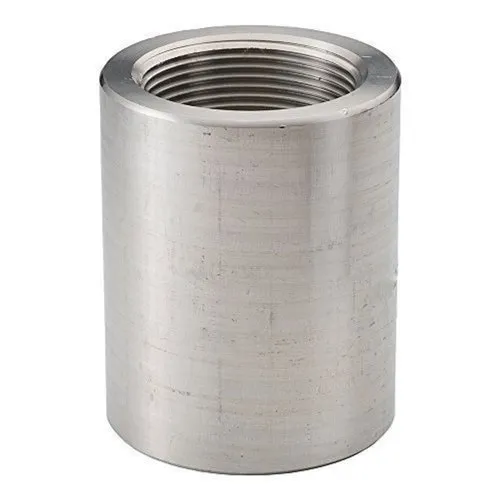
Rebar couplers are used for joining rebars with full tension capacity. The ends of bars to be joined are provided with Parallel threads, and the bars are joined using a coupler sleeve that transfers the force on the rebar across the connection.
Why coupler is used in reinforcement?
The coupler in reinforcement is used since it is economical and cost efficient unlike the lapping system, where some part of the bar is wasted due to lapping. The rebar coupler is particularly cost efficient for large diameter bars in the big projects of construction and construction of skyscrapers.
Benefits of Reinforcement Couplers
Reinforcement Couplers are mechanical connection systems used to join reinforcing bars and create continuity within reinforced concrete structures. They provide an alternative to traditional overlapping of reinforcement bars and can be useful where space, congestion or structural detailing needs to be carefully managed.
- Reliable Mechanical Connection – Provides a secure connection between reinforcing bars when correctly selected and installed.
- Reduced Rebar Congestion – Helps reduce the amount of overlapping reinforcement in heavily reinforced areas.
- Efficient Load Transfer – Designed to transfer forces between connected reinforcement bars as specified by the structural design.
- Space Efficient – Can be useful where conventional lap lengths create space constraints.
- Simplified Reinforcement Detailing – Supports organized reinforcement arrangements in complex structural elements.
- Construction Flexibility – Can facilitate reinforcement connections in different stages of construction.
- Suitable for Large-Diameter Bars – Available coupler systems can be selected according to bar diameter and project requirements.
Advantages of Reinforcement Couplers
Reinforcement Couplers offer several practical advantages for reinforced concrete construction where reliable bar continuity and efficient reinforcement detailing are required.
- Mechanical connection without conventional bar lapping
- Helps reduce reinforcement congestion
- Efficient use of reinforcement space
- Suitable for selected large-diameter rebar applications
- Supports faster reinforcement assembly
- Provides consistent bar-to-bar connection when properly installed
- Useful in confined structural areas
- Can simplify reinforcement detailing
- Suitable for new construction and selected strengthening works
- Adaptable to project-specific reinforcement requirements
Uses of Reinforcement Couplers
Reinforcement Couplers are used in reinforced concrete construction where reinforcing bars need to be mechanically connected.
Common Applications
High-Rise Buildings
Used for connecting reinforcement bars in columns, beams, shear walls and other heavily reinforced structural elements.
Foundations
Can be used where reinforcement continuity is required in foundations, pile caps and other structural components.
Columns & Beams
Suitable for connecting reinforcement bars where conventional lap splicing may create congestion.
Structural Walls
Can support reinforcement continuity in shear walls and other reinforced concrete wall systems.
Bridges & Infrastructure
Used in selected bridge and infrastructure applications requiring reliable mechanical rebar connections.
Tunnels & Underground Structures
Can be considered where reinforcement connections are required in confined construction areas.
Structural Strengthening
Suitable coupler systems may be used for selected strengthening and modification works according to engineering requirements.
Codes for Reinforcement Couplers?
This standard covers the requirements and tests applicable to reinforcement couplers to be used in reinforced concrete constructions for mechanical splicing of bars conforming to:
- IS 16172
- IS 1786
- Eurocode-2
- BS 8110
- DN 1045
- ACI 318
- IBC
- ASME Sec III Div-2
Installation Of Reinforcement Couplers
The system contains one Coupler and two reinforcing bars with threads. The bar is typically supplied with the coupler already installed. In this case, begin
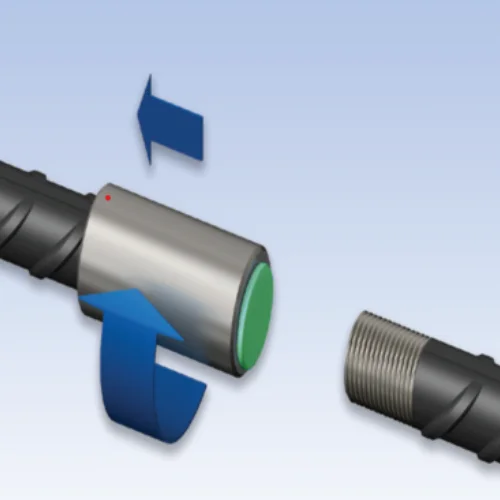
Screw the coupler to the rear of the thread on the fixed bar and lock tight. The bar end should be central within the coupler.

Position and rotate the continuation bar in the coupler

Tighten the joint on the continuation bar. After tightening there should be no more than 2-4mm of thread exposed, depending on the diameter of the rebar and type of threading.
Why Choose Synviro for Reinforcement Couplers?
At Synviro, we provide reinforcement solutions focused on the requirements of modern concrete construction and infrastructure projects.
Application-Focused Solutions
We consider bar diameter, structural requirements, connection conditions and project specifications when selecting suitable couplers.
Reduced Reinforcement Congestion
Our coupler solutions can help create more organized reinforcement arrangements where traditional lap splicing may require additional space.
Construction-Oriented Approach
We focus on practical solutions that support efficient reinforcement installation and project execution.
Suitable for Infrastructure Projects
Reinforcement Couplers can be considered for buildings, foundations, bridges, tunnels and other reinforced concrete structures.
Quality-Focused Products
We focus on product suitability, connection performance and application requirements.
Technical Support
We can support project teams in understanding coupler applications and installation requirements based on the intended reinforcement system.
Frequently Asked Questions
Reinforcement Couplers are mechanical devices used to connect two reinforcing bars and provide continuity within reinforced concrete structures.
They can be used in columns, beams, foundations, shear walls, high-rise structures, bridges, tunnels and other reinforced concrete applications.
A properly selected and installed coupler is designed to transfer the required forces between connected reinforcement bars according to its specified performance and the approved structural design.
Important factors include bar diameter, steel grade, required connection performance, available space, installation conditions and applicable project specifications.