Self Drilling Anchors
Self Drilling Anchors
Self-drilling anchors are the advanced type of fully threaded hollow steel tube rods. SDA is a fully threaded rod with an inner and outer diameter hollow steel tube. It is provided with a sacrificial drill bit at the end to facilitate the drilling process, coupler to join two SDA bars, screw nut, base plate, etc. The hollow steel tube has one side sacrificial drill bit and, at another end, tied with nut and steel base plate. A hollow steel tube is placed in the center of the drill hole using a centralizer to maintain its position. The grout, which covers the SDA periphery, protects the SDA under aggressive environment conditions with simultaneous grout ground and grout bar interaction throughout the threaded bond length. Self-drilling sacrificial drill varies based on the rock or soil conditions.
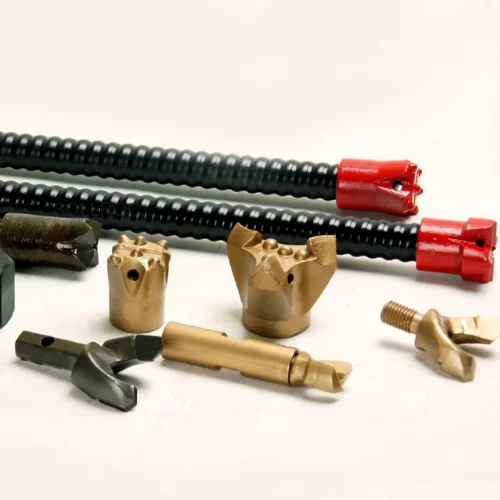
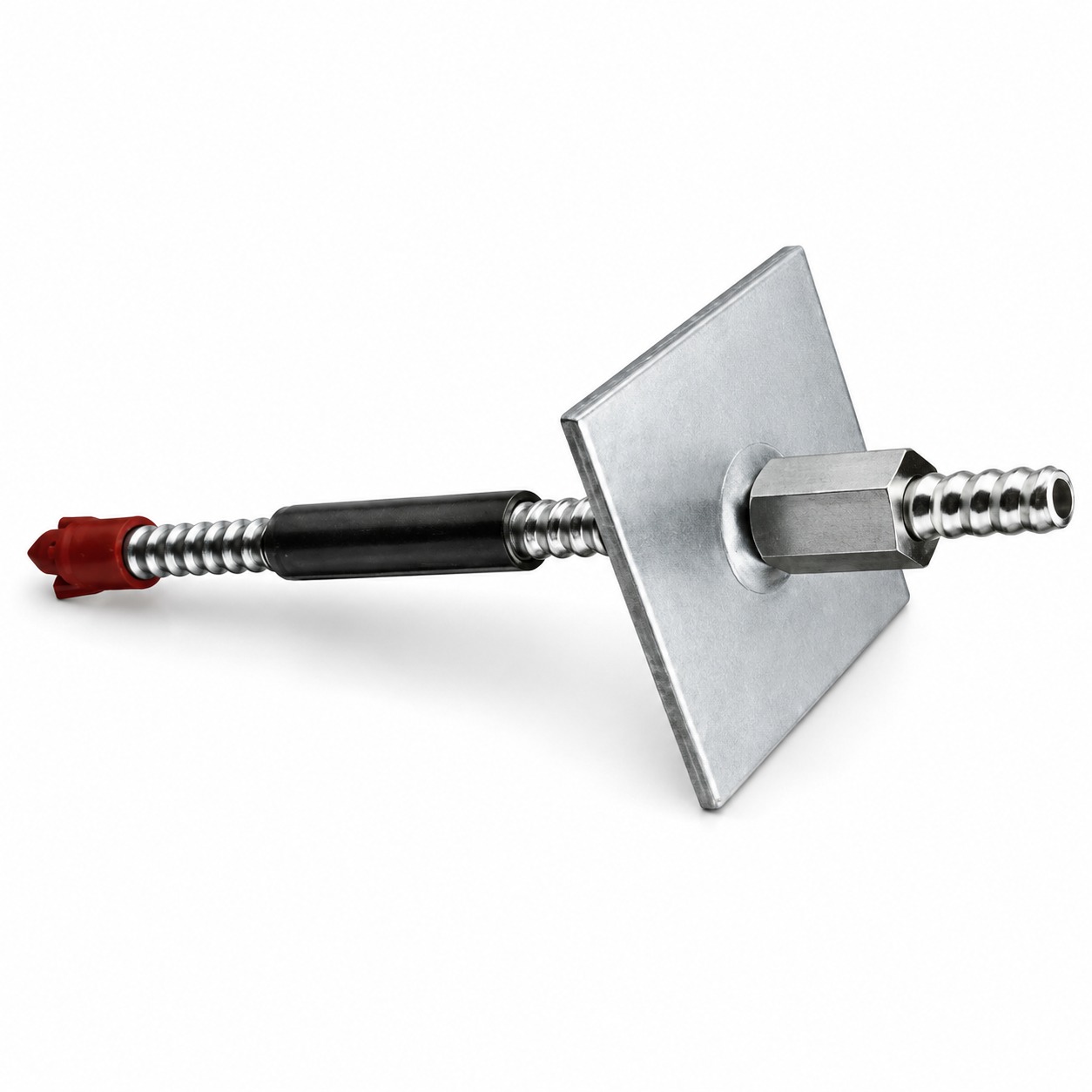
Self-drilling anchors are the advanced type of fully threaded hollow steel tube rods. SDA is a fully threaded rod with an inner and outer diameter hollow steel tube. It is provided with a sacrificial drill bit at the end to facilitate the drilling process, coupler to join two SDA bars, screw nut, base plate, etc. The hollow steel tube has one side sacrificial drill bit and, at another end, tied with nut and steel base plate. A hollow steel tube is placed in the center of the drill hole using a centralizer to maintain its position. The grout, which covers the SDA periphery, protects the SDA under aggressive environment conditions with simultaneous grout ground and grout bar interaction throughout the threaded bond length. Self-drilling sacrificial drill varies based on the rock or soil conditions.
The hollow steel tube has more bending strength and more circumference area compared to the solid steel bar (soil nail) with the same cross-sectional area. Due to these benefits of self-drilling anchor, it has advantages over other for reinforcing solid bars, soil nails, and rock anchors. SDA installation can be done by a small drilling machine that can move in difficult access areas and provide slope protection work in difficult reach. Its application, not just only application to soil and slope reinforcement, but also for tunnel application like forepoling for tunnel advancement.
Uses of Self-Drilling Anchors
Self Drilling Anchors (SDA) are widely used for ground reinforcement and stabilization in challenging soil and rock conditions. Their hollow, fully threaded design allows drilling, anchoring and grouting to be carried out as part of an integrated installation process. This makes them suitable for applications where conventional drilling and anchoring methods may be difficult or less practical.
• Slope Stabilization
Self drilling anchors help reinforce unstable slopes and provide additional support in weak, fractured or variable ground conditions.
• Soil Nailing
SDA systems can be used for soil reinforcement and stabilization of cut slopes, excavations and other earth structures.
• Tunnel & Underground Construction
They are used for ground reinforcement, tunnel support and stabilization in underground excavation works.
• Foundation & Micropiling Applications
Self drilling anchor systems can be considered for foundation support and ground improvement applications where drilling conditions are challenging.
• Rockfall Protection
SDA can provide anchoring support for rockfall mitigation and slope protection systems.
• Highway & Railway Embankments
They can be used to improve ground stability around infrastructure corridors, cuttings and embankments.
• Challenging Ground Conditions
The system is particularly useful where loose, fractured or unstable ground makes conventional open-hole drilling difficult.
Application Areas Of Self-Drilling Anchors


Components of SDA
Sacrificial Drill Bit
One of the main components in this technology is a sacrificial drill bit. It helps the drilling and inserting of SDA operation at the same time. This increases the productivity of the SDA installation. The sacrificial drill bit quality defines improving the SDA technique’s penetration rate, performance, and cost-efficiency.
Hollow Bars
The rolling process enhances the yield strength of the steel. The fully threaded hollow bar allows drilling using a sacrificial drill bit at one end and another end to connect to the standard drill tool that works simultaneously for drilling and grouting. Full threading length of SDA makes it more beneficial to grate bonding to grout and tube and enable for drill rig connections and couplings.
Couplers
The couplers’ main aim is to provide the connection between seating of each hollow tube face-to-face connection. This is the main component for the energy transmission from end to end connection of anchor and provides maximum percussive energy to drill bit with lesser losses.
Bearing plates
Bearing plate with sufficient thickness of steel plates having a central hole required at the face of SDA. The main function of this plate is to transfer the tension load of SDA to the ground.
Hexagonal nuts
The hexagonal nuts are made of high strength steel with properly made by all edges to satisfy the demands of anchor specifications and other operations.
Shanks
SDA installation, rotary percussion process the rotation, and percussion transfer from the hammer to hollow bar system using the shank connector.
Installation of Self Drilling Anchors
The Self Drilling Anchor installation process combines drilling, anchor placement and grouting into an integrated operation. The exact procedure depends on ground conditions, anchor specifications, drilling equipment and project design.
Step 1: Site Assessment & Marking
The installation area is prepared and anchor locations are marked according to the approved project design. Ground conditions, required anchor orientation and drilling depth are considered before starting the work.
Step 2: Drilling with the Sacrificial Drill Bit
The hollow self drilling anchor bar is connected to a suitable drill bit and drilling begins. The anchor bar remains in the borehole as drilling progresses, making it suitable for ground conditions where maintaining an open hole may be difficult.
Step 3: Anchor Installation
The fully threaded hollow bar advances into the ground during drilling. Couplers can be used where additional anchor length is required, subject to the project specification.
Step 4: Grouting
After or during drilling, depending on the selected installation method, grout is passed through the hollow anchor bar and delivered into the surrounding ground. The grout helps fill the borehole and establishes interaction between the anchor and surrounding soil or rock.
Step 5: Bearing Plate & Nut Installation
Once the required installation depth and grouting requirements are achieved, the bearing plate and nut assembly are installed at the exposed end of the anchor. These components transfer the required support to the reinforced ground zone.
Step 6: Final Inspection
The completed installation is checked for alignment, installation depth, grouting and component placement according to the project requirements. Any testing or verification is carried out as specified in the approved design.
Advantages of Self Drilling Anchors
Self Drilling Anchors offer an integrated approach to drilling, anchoring and grouting, making them a practical solution for ground stabilization and reinforcement. Their hollow-bar configuration allows grout to be introduced during or after drilling, depending on the selected installation method and project requirements.
Key Advantages
• Faster Installation
Drilling and anchor installation can be combined into a streamlined operation, helping improve installation efficiency.
• Suitable for Unstable Ground
The system can be advantageous in loose, fractured or collapsing formations where maintaining an open borehole can be difficult.
• Integrated Grouting
The hollow anchor bar allows grout to be delivered through the anchor, helping improve interaction between the anchor and surrounding ground.
• Reduced Borehole Collapse Risk
Because the anchor is installed during drilling, the system can reduce problems associated with maintaining an open drilled hole in unstable formations.
• Flexible Ground Reinforcement
Self drilling anchors can be adapted for different ground conditions, installation depths and project requirements.
• Effective Ground Support
When properly designed and installed, SDA systems can contribute to improved stability of slopes, excavations and underground structures.
• Suitable for Restricted Sites
The installation system can be useful where access and working space are limited and efficient drilling operations are required.
Features of Self Drilling Anchors
Self Drilling Anchors are designed to provide efficient ground reinforcement in challenging soil and rock conditions. Their hollow, fully threaded design allows drilling and anchor installation to be carried out as an integrated process.
- Hollow Threaded Anchor Bar – Allows grout to be delivered through the hollow bar during installation.
- Sacrificial Drill Bit – Enables drilling and anchoring in loose, fractured or difficult ground conditions.
- Fully Threaded Design – Provides flexibility for cutting, coupling and adjusting anchor lengths as required.
- Integrated Drilling & Anchoring – Combines drilling and anchor placement into a streamlined installation process.
- Grouting Capability – Supports effective grout distribution around the installed anchor.
- Coupling System – Threaded couplers can be used to extend anchor lengths for deeper applications.
- Versatile Applications – Suitable for slope stabilization, soil nailing, tunnelling, foundations and other ground reinforcement works.
SDA systems offer a practical and adaptable approach to ground anchoring where conventional drilling methods may face challenging site conditions.
Why Choose Synviro for Self Drilling Anchors?
Synviro provides Self Drilling Anchor solutions for geotechnical and infrastructure applications where reliable ground reinforcement and efficient installation are important. Our approach focuses on selecting suitable anchor components and installation methods according to project-specific requirements.
• Application-Specific Solutions
We consider ground conditions, project requirements, installation depth and intended application when recommending suitable SDA solutions.
• Complete Anchor Components
Self drilling anchor systems can include hollow threaded bars, drill bits, couplers, bearing plates and nuts as required for the application.
• Technical Understanding
Our focus is on providing practical anchoring solutions for slope stabilization, tunnelling, soil reinforcement and other geotechnical applications.
• Efficient Installation Approach
The self-drilling concept combines drilling and anchor installation, helping simplify operations in challenging ground conditions.
• Quality-Focused Products
We focus on suitable product selection and consistent performance requirements for demanding geotechnical applications.
• Infrastructure-Focused Experience
Our solutions are intended for applications across slopes, tunnels, foundations, highways, railways and other infrastructure projects.