Canal & Reservoir Lining Work
Canal & Reservoir Lining Work
Canal and reservoir lining improve water conservation by minimizing losses due to seepage and evaporation. They help maintain consistent water flow, ensuring efficient irrigation and water distribution.
Common lining materials include concrete, clay, asphalt, and geomembranes, offering durability and resistance to leakage. These linings also protect the surrounding soil from erosion and contamination, promoting environmental sustainability. Properly lined systems require less maintenance, extending their lifespan and reducing operational costs.

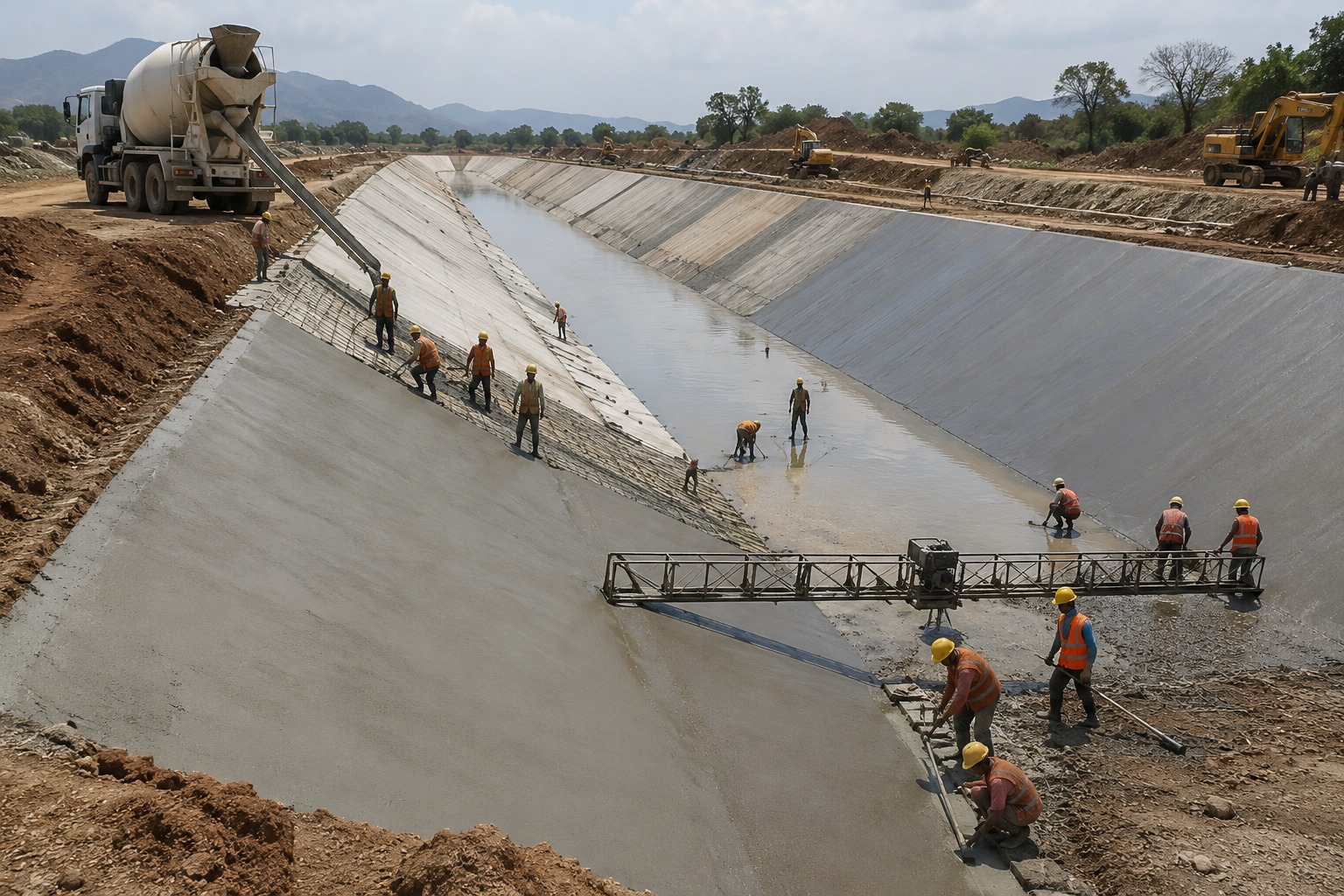
Canal and reservoir lining improve water conservation by minimizing losses due to seepage and evaporation. They help maintain consistent water flow, ensuring efficient irrigation and water distribution.
Common lining materials include concrete, clay, asphalt, and geomembranes, offering durability and resistance to leakage. These linings also protect the surrounding soil from erosion and contamination, promoting environmental sustainability. Properly lined systems require less maintenance, extending their lifespan and reducing operational costs.
Applications
- Irrigation Systems : Lined canals minimize water loss due to seepage, ensuring efficient water delivery to agricultural fields. This is particularly crucial in arid regions where water conservation is vital.
- Flood Control : Properly lined canals can handle higher volumes of water, reducing the risk of overflow and subsequent flooding.
- Urban Drainage : In urban areas, lined canals facilitate effective storm water management, preventing waterlogging and infrastructure damage.
- Water Storage : Reservoir linings prevent water seepage into the ground, ensuring the stored water remains available for consumption, irrigation, or industrial use.
- Waste Containment : In industrial settings, lined reservoirs are used to contain hazardous waste, preventing contamination of surrounding soil and groundwater.
- Recreational Facilities : Lined reservoirs are also used in recreational areas, such as fishing ponds and artificial lakes, maintaining water levels and quality.
Installation Process for Canal & Reservoir Lining
01 — Site Inspection
Assess the canal or reservoir condition, dimensions, soil/substrate condition, water flow and existing damage.
02 — Surface Preparation
Clean and prepare the surface by removing loose soil, debris, vegetation and damaged material. The base is brought to the required profile.
03 — Reinforcement & Lining Preparation
Install the specified reinforcement or supporting system according to the project design and application requirements.
04 — Lining Installation
Execute the specified lining system with proper alignment, thickness, joints and detailing as required for the project.
05 — Quality Inspection
Inspect the completed lining for surface continuity, joints, reinforcement placement and other project-specific quality requirements.
06 — Final Finishing & Handover
Complete finishing works and ensure the lined canal or reservoir is ready for controlled water operation.
Benefits of Canal & Reservoir Lining
Canal and reservoir lining is an important solution for improving water management and protecting water-retaining structures. A properly designed lining system helps reduce water seepage into surrounding soil, minimize erosion and maintain the efficiency of irrigation and water storage infrastructure. Depending on project requirements and site conditions, suitable lining materials and reinforcement systems can be selected to provide reliable and durable performance.
Key Benefits
1. Reduced Water Seepage
Lining helps minimize unwanted water loss through the canal or reservoir bed and sides, supporting more efficient water utilization.
2. Improved Water Conservation
By reducing seepage losses, canal and reservoir lining can help retain more water for irrigation, storage and other intended applications.
3. Protection Against Soil Erosion
A suitable lining system protects exposed surfaces from water-induced erosion and helps maintain the stability of canal banks and reservoir areas.
4. Enhanced Structural Durability
Proper reinforcement and lining can improve the resistance of water-retaining structures to operational and environmental stresses.
5. Lower Maintenance Requirements
A well-designed lining system can help reduce surface deterioration and maintenance requirements over the service life of the structure.
6. Better Hydraulic Performance
Smooth and properly constructed lined surfaces can support more controlled water flow and reduce losses associated with an uneven or eroding surface.
Uses of Canal & Reservoir Lining
Canal and reservoir lining is used across various water management and infrastructure projects where controlling seepage, protecting surfaces and improving water-retention performance are important. A suitable lining system helps protect the canal or reservoir from water-induced erosion while supporting more efficient management of stored and conveyed water.
Key Applications
Irrigation Canals
Used to reduce seepage losses and protect canal beds and side slopes, helping maintain efficient water flow for agricultural irrigation.
Water Storage Reservoirs
Lining helps protect reservoir surfaces and reduce unwanted water loss through seepage, supporting effective water storage.
Canal Networks
Suitable lining systems can be applied across canal networks to improve surface durability and protect water conveyance infrastructure from erosion and deterioration.
Water Management Infrastructure
Used in projects where controlled water movement, surface protection and improved infrastructure durability are required.
Flood Control & Drainage Systems
Lining can help protect exposed surfaces from continuous water flow and erosion in selected drainage and flood-management structures.
Industrial Water Storage
Can be considered for suitable industrial water-retention structures where seepage control, surface protection and long-term performance are important.
Following Products Are Applicable For Canal & Reservoir Lining Work


Why Choose Synviro for Canal & Reservoir Lining?
Synviro provides application-focused solutions for canal and reservoir lining works, helping improve water retention, reduce seepage losses and enhance the durability of water-retaining structures. Our approach combines suitable reinforcement products, technical understanding and project-specific execution requirements for reliable performance.
Key points:
- Seepage Loss Reduction – Helps minimize unwanted water loss through the canal or reservoir base.
- Structural Reinforcement – Supports durable lining and reinforcement requirements in concrete structures.
- Project-Specific Solutions – Solutions selected according to site conditions and application requirements.
- Long-Term Performance – Focus on durability, water retention and reduced maintenance requirements.
Frequently Asked Questions - Canal Reservoir Lining Works
Canal and reservoir lining work involves protecting the exposed surfaces of water-retaining structures with suitable lining systems to reduce seepage, control erosion and improve overall water management efficiency.
Proper lining helps minimize water seepage, protect canal and reservoir surfaces from erosion, improve water retention and support the long-term performance of the infrastructure.
Far far away, behind the word mountains, far from the countries Vokalia and Consonantia, there live the blind texts. Separated they live in Bookmarksgrove right at the coast
The appropriate solution depends on project requirements, site conditions and structural design. Reinforcement solutions such as Steel Fibres and FRP Rebars & Anchors can be considered for suitable concrete lining and infrastructure applications.