Tunnels And Caverns Radial Protection
Radial protection works in tunnels and caverns are essential for maintaining structural integrity and ensuring safety during and after excavation. These measures involve reinforcing the surrounding rock or soil to prevent collapses, manage stress distribution, and control deformations.
Such reinforcement typically includes techniques like rock bolting, shotcreting, and the installation of steel ribs or fiber-reinforced linings, tailored to the specific geological conditions. Additionally, these methods help mitigate the impact of seismic activity and groundwater infiltration, enhancing the long-term durability of the structure. Proper planning, design, and execution of radial protection measures are critical, as they significantly influence the efficiency of construction and the operational lifespan of the tunnel or cavern.
Radial protection works in tunnels and caverns are essential for maintaining structural integrity and ensuring safety during and after excavation. These measures involve reinforcing the surrounding rock or soil to prevent collapses, manage stress distribution, and control deformations.
Such reinforcement typically includes techniques like rock bolting, shotcreting, and the installation of steel ribs or fiber-reinforced linings, tailored to the specific geological conditions. Additionally, these methods help mitigate the impact of seismic activity and groundwater infiltration, enhancing the long-term durability of the structure. Proper planning, design, and execution of radial protection measures are critical, as they significantly influence the efficiency of construction and the operational lifespan of the tunnel or cavern.
Key Applications
- Primary Support Systems: Immediately after excavation, primary supports such as shotcrete (sprayed concrete) and rock bolts are installed to stabilize the exposed surfaces. Shotcrete forms a protective lining that adheres to the rock surface, while rock bolts anchor unstable rock masses to more stable sections, enhancing overall stability.
- Secondary Support Systems: For long-term stability, secondary supports like in-situ concrete linings are applied over the primary support. This additional layer provides increased strength and durability, ensuring the tunnel or cavern can withstand operational loads and environmental factors.
- Waterproofing Measures: To prevent water ingress, which can weaken structural components and lead to deterioration, waterproof membranes are installed between the primary and secondary linings. These membranes act as barriers, protecting the infrastructure from moisture-related issues.
- Stress Monitoring and Management: In large caverns, monitoring radial stress variations is crucial. Instrumentation is used to measure stress changes around the cavern, informing the design and implementation of appropriate support systems to manage these stresses effectively.
- Empirical Design Methods: Empirical studies, such as analyzing radial cross-sections of conduits in cavernous limestone, aid in characterizing porosity and understanding the rock mass behavior. This information is vital for designing support systems tailored to specific geological conditions
Implementing these radial protection measures is essential for the safe construction and operation of tunnels and caverns, particularly in complex geological settings. They help mitigate risks associated with ground instability, water ingress, and stress-induced deformations, ensuring the longevity and safety of underground structures.
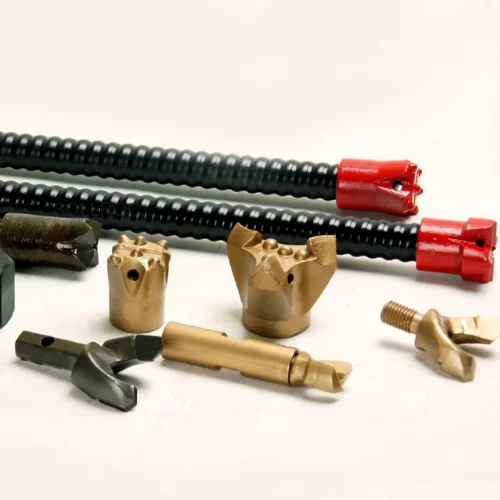
Following Products Are Applicable For Tunnels And Caverns Radial Protection
Test results

Coupler Strength