
Glass Fibre Reinforcement Bar & Anchors
Fiber-reinforced polymer (FRP) is a composite material made of a polymer matrix reinforced with fibers. The fibers are usually glass (GFRP), carbon (CFRP), or aramid (AFRP). The polymer is usually an epoxy, vinylester or polyester thermosetting resin. While the fibers carry the load, the resin transfers stress between reinforcing fibers and protects fibers from mechanical and environmental damage.
The composite structure of FRP allows very unique anisotropic mechanical properties: strong tensile strength along the fibers, low transversal resistance, and constant elasticity. In addition, FRP is not sensitive to corrosion, GFRP does not conduce electrical and magnetic fields.

Strong Tensile Strength

Low Transversal Resistance

Overall Constant Elasticity
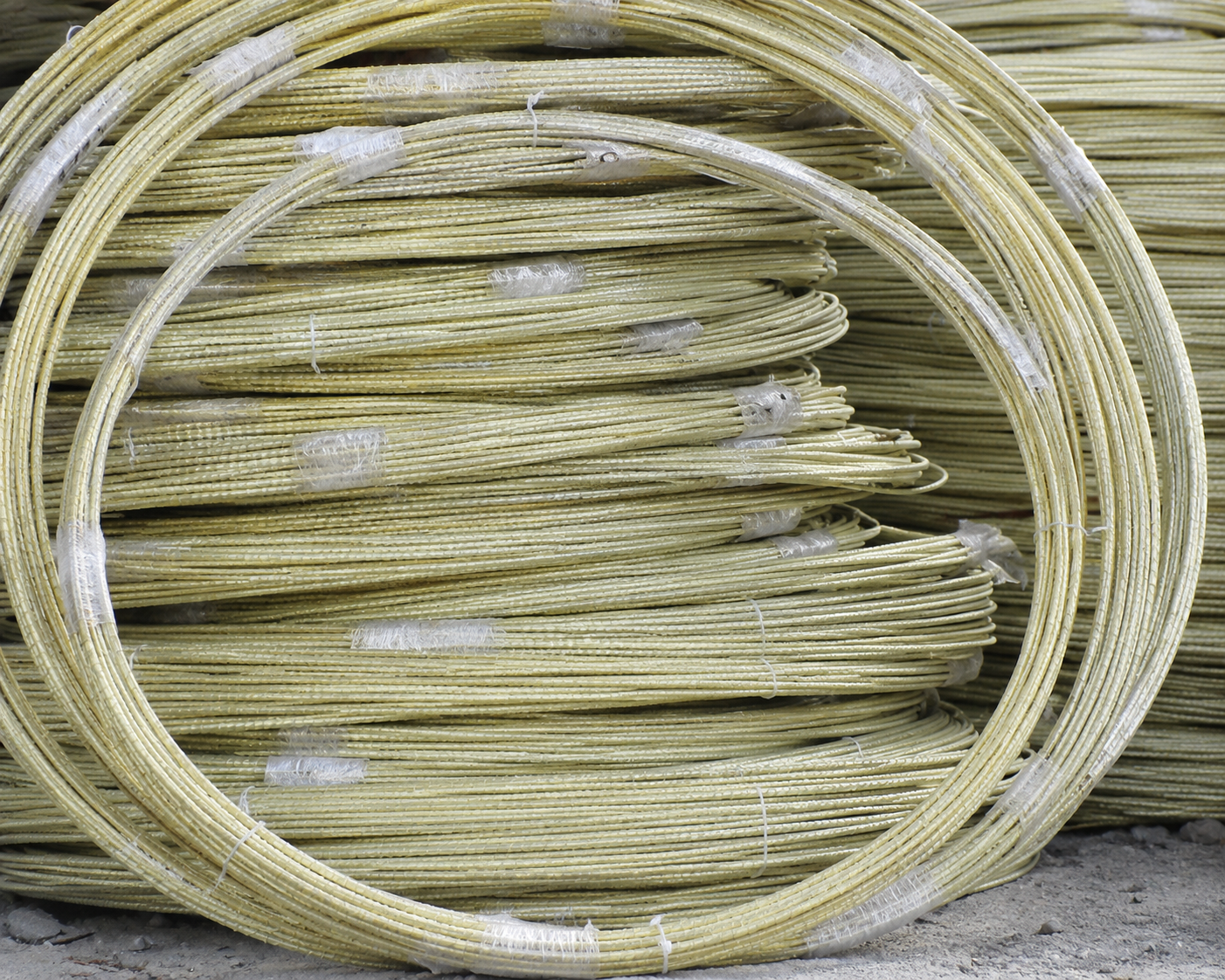
Fiber-reinforced polymer (FRP) is a composite material made of a polymer matrix reinforced with fibers. The fibers are usually glass (GFRP), carbon (CFRP), or aramid (AFRP). The polymer is usually an epoxy, vinylester or polyester thermosetting resin. While the fibers carry the load, the resin transfers stress between reinforcing fibers and protects fibers from mechanical and environmental damage.
The composite structure of FRP allows very unique anisotropic mechanical properties: strong tensile strength along the fibers, low transversal resistance, and constant elasticity. In addition, FRP is not sensitive to corrosion, GFRP does not conduce electrical and magnetic fields.
Main uses of Glass Fibre Reinforcement Bar & Anchors

RCC roads and pavements, Tunnel boring machine (TBM).

Parking garages.

Chemical Plants.

Structure built in close to sea water.

Highway construction.

Bridge desk slab, bridge enclosure.

Hospital MRI areas.

Reinforcement of RCC tanks.

Swimming pool, radio frequency sensitive area.
Main advantages of FRP
There are several advantages of using FRP, the most important are the following:
- 1. Impervious to corrosion
- 2. ¼ weight of steel
- 3. 100 to 400% strength of steel
- 4. Low modulus
- 5. Low transversal resistance and ease to break, therefore possibility to use as temporary anchors or in the industry.
Features
- Absolute Corrosion resistance.
- 2X Tensile strength to steel.
- 75% Lighter weight then steel.
- Last longer services life without maintenance.
- Competitive and consisting pricing.
- Electrical and thermal insulator.
- Excellent bond strength with concrete.
- Transparent to radio frequencies.
Features
- Absolute Corrosion resistance.
- 2X Tensile strength to steel.
- 75% Lighter weight then steel.
- Last longer services life without maintenance.
- Competitive and consisting pricing.
- Electrical and thermal insulator.
- Excellent bond strength with concrete.
- Transparent to radio frequencies.
Applications
- RCC roads and pavements, Tunnel boring machine (TBM).
- Parking garages.
- Chemical Plants.
- Structure built in close to sea water.
- Highway construction.
- Bridge desk slab, bridge enclosure.
- Hospital MRI areas.
- Reinforcement of RCC tanks.
- Swimming pool, radio frequency sensitive area.
Fiber-reinforced polymer (FRP) is a composite material made of a polymer matrix reinforced with fibers. The fibers are usually glass (GFRP), carbon (CFRP), or aramid (AFRP). The polymer is usually an epoxy, vinylester or polyester thermosetting resin. While the fibers carry the load, the resin transfers stress between reinforcing fibers and protects fibers from mechanical and environmental damage.
The composite structure of FRP allows very unique anisotropic mechanical properties: strong tensile strength along the fibers, low transversal resistance, and constant elasticity. In addition, FRP is not sensitive to corrosion, GFRP does not conduce electrical and magnetic fields.
Theses specific properties allow FRP to be a material of choice for specific applications in the aerospace, automotive, marine, and construction industries.
Test results

Coupler Strength

