
Anchors For Transmission Line
High-Performance Anchoring Solutions for Power Transmission Infrastructure
An anchor rod is a vital component in the construction of transmission lines, used to provide structural stability by anchoring guy wires to the ground. These rods are essential for supporting the poles or towers of overhead power lines, ensuring their durability and resistance to external forces such as wind, tension, and uneven loads. Manufactured from high-strength steel, anchor rods are designed to withstand heavy loads and harsh environmental conditions. They are available in various lengths, diameters, and designs to accommodate different soil types and installation requirements. Easy to install and highly reliable, these rods play a critical role in maintaining the integrity of transmission structures. Proper selection and installation of anchor rods are crucial for the long-term performance and safety of power transmission systems.
Transmission Line Anchors are engineered to provide secure foundation support and structural stability for transmission towers, utility poles, guyed structures, and overhead power line systems. Designed to withstand high tensile loads, wind pressure, and varying ground conditions, these anchoring systems ensure long-term reliability and safety in power transmission and utility infrastructure projects.
At Synviro Solution Pvt Ltd. , we supply robust anchoring solutions that meet the demanding requirements of transmission line construction, utility installations, renewable energy projects, and heavy civil infrastructure.
Installation Process




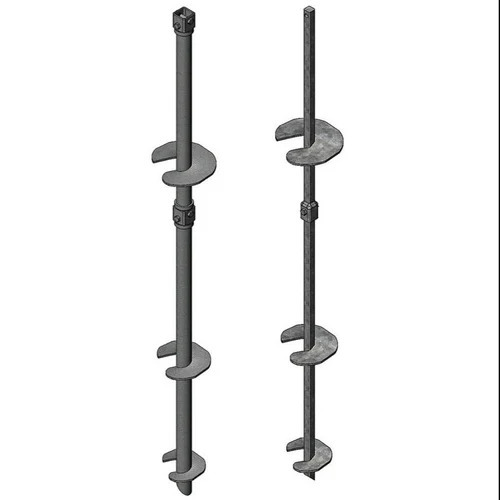
An anchor rod is a vital component in the construction of transmission lines, used to provide structural stability by anchoring guy wires to the ground. These rods are essential for supporting the poles or towers of overhead power lines, ensuring their durability and resistance to external forces such as wind, tension, and uneven loads. Manufactured from high-strength steel, anchor rods are designed to withstand heavy loads and harsh environmental conditions. They are available in various lengths, diameters, and designs to accommodate different soil types and installation requirements. Easy to install and highly reliable, these rods play a critical role in maintaining the integrity of transmission structures. Proper selection and installation of anchor rods are crucial for the long-term performance and safety of power transmission systems.
Transmission Line Anchors are specialized ground anchoring systems installed to secure transmission towers, guy wires, and utility poles against uplift, overturning, and lateral forces. Depending on soil conditions and project requirements, anchors may include helical anchors, plate anchors, anchor rods, or rock anchors. These systems help maintain structural integrity under high wind loads, seismic activity, and continuous operational stress.
Know More About Installation Process
- Site Preparation:
- Assess soil type and load requirements to determine the appropriate anchor rod and installation method.
- Drilling/Excavation:
- Drill a hole or dig a trench for placing the rod, depending on the terrain.
- Insertion and Securing:
- Insert the anchor rod and secure it with concrete, grout, or screw mechanisms, as required.
- Guy Wire Connection:
- Attach guy wires to the anchor rod using clamps, nuts, and washers, ensuring proper tension.
- Inspection:
- Check for alignment and stability before energizing the transmission line.
Main Uses Of Anchors For Transmission Line

Stabilizing Poles and Towers
Anchor rods are installed to counteract the lateral and vertical forces acting on transmission poles and towers, preventing tipping or displacement.
Guy Wire Connections
They serve as a connection point between guy wires and the ground, helping to secure the structure and maintain proper alignment.
High-Tension Support
Used in high-voltage transmission lines, where heavy tension and large spans require robust anchoring solutions.
Terrain Adaptability
Designed for use in diverse terrains, including rocky soils, loose sands, and clay, to ensure proper grounding in any condition.
Main Advantages Of Anchor Rods in Transmission Lines
There are several advantages of using Anchor Rods in Transmission Lines, the most important are the following:
1. Durability- Withstand extreme loads and environmental conditions.
2. Versatility- Suitable for various terrains and structural designs.
3. Cost-Effective- Long service life with minimal maintenance.
4. Safety- Ensures stability and reliability of transmission infrastructure.
Features of Anchor Rods for Transmission Lines
Material
- Made from high-strength steelto withstand high tension and mechanical stress.
- Often galvanizedto resist corrosion, especially in harsh environments.
Threaded Design
- The rod’s upper end is threaded to allow for the attachment of nuts, washers, and guy wire clamps.
Length and Diameter
- Available in various lengths and diameters to match the load and soil conditions.
- Typical sizes range from 16mm to 36mm in diameterand up to several meters in length.
Corrosion Resistance
- Hot-dip galvanized or coated to enhance durability and withstand weathering.
Ease of Installation
- Compatible with manual or machine-driven installation techniques.
Compatibility
- Can be used with a wide range of anchors, including screw anchors, plate anchors, and grouted anchors.
Features
Material :
Made from high-strength steelto withstand high tension and mechanical stress. Often galvanizedto resist corrosion, especially in harsh environments.
Threaded Design :
The rod's upper end is threaded to allow for the attachment of nuts, washers, and guy wire clamps.
Length and Diameter :
Available in various lengths and diameters to match the load and soil conditions. Typical sizes range from 16mm to 36mm in diameterand up to several meters in length.
Corrosion Resistance :
Hot-dip galvanized or coated to enhance durability and withstand weathering.
Ease of Installation :
Compatible with manual or machine-driven installation techniques.
Compatibility :
Can be used with a wide range of anchors, including screw anchors, plate anchors, and grouted anchors.
Key Applications of Transmission Line Anchors
Transmission Towers
Provide dependable anchoring for high-voltage transmission towers, ensuring long-term structural stability.
Utility Pole Support
Secure utility poles against overturning and movement caused by wind, cable tension, and external loads.
Guy Wire Anchoring
Maintain proper tension in guy wires used for telecommunication towers, transmission poles, and electrical infrastructure.
Renewable Energy Projects
Used in wind farms and solar power installations to stabilize support structures and electrical distribution systems.
Railway & Highway Electrification
Support overhead electrification systems by providing reliable ground anchoring for poles and masts.
Industrial & Infrastructure Projects
Suitable for substations, industrial utilities, heavy equipment foundations, and power distribution networks.
Types of Anchor Rods for Transmission Lines
Let’s look at the types of anchor rods for transmission line :
Straight Anchor Rods
Simple and versatile, used in standard installations.
Eyebolt Anchor Rods
Feature an eye at the top for connecting guy wires directly.
Swivel Anchor Rods
Allow for slight adjustments in the angle of guy wires.
Expanding Rock Anchor Rods
Ideal for rocky terrains where traditional anchoring methods are challenging.
Advantages of Anchor Rods in Transmission Lines
Let’s look at some advantagesof anchor ross in transmission lines:
Durability
Withstand extreme loads and environmental conditions.
Versatility
Suitable for various terrains and structural designs.
Cost-Effective
Long service life with minimal maintenance.
Safety
Ensures stability and reliability of transmission infrastructure.