Umbrella Pipes
Umbrella Pipes
Umbrella pipes are structural elements used in construction, especially for tunneling and excavation projects. They consist of steel pipes installed in a radial pattern to stabilize the ground and provide support in areas where soil or rock conditions are weak or unstable. These pipes act as a protective canopy, preventing collapses and ensuring structural integrity during excavation. They are commonly used in soft ground tunneling, soil reinforcement, and landslide protection systems. Umbrella pipes are installed using drilling techniques and can be grouted to enhance strength and durability. Their flexibility allows them to adapt to varying ground conditions, making them a reliable solution for complex engineering challenges.
Umbrella pipes are structural elements used in construction, especially for tunneling and excavation projects. They consist of steel pipes installed in a radial pattern to stabilize the ground and provide support in areas where soil or rock conditions are weak or unstable. Below is a detailed breakdown:

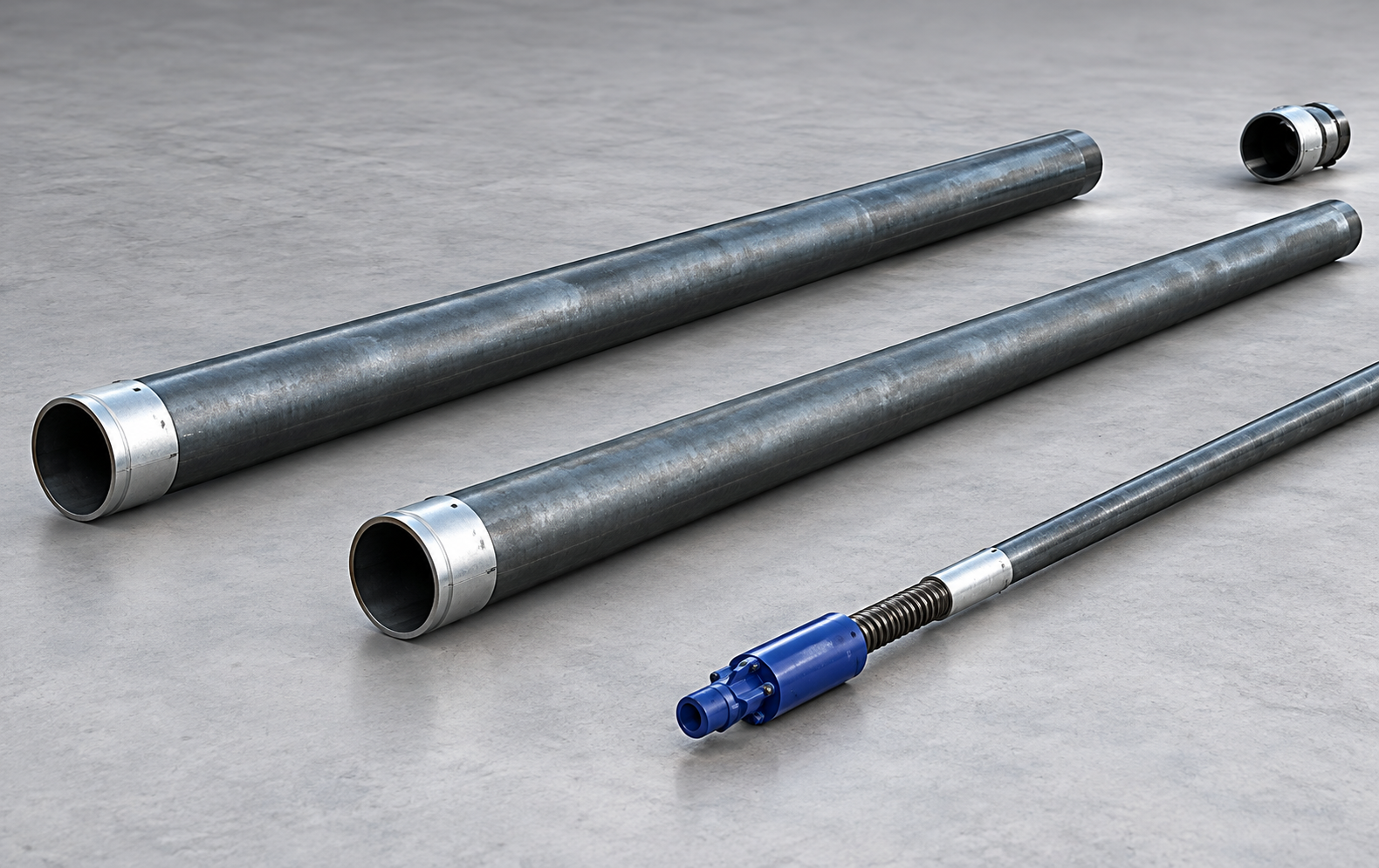
Umbrella pipes are structural elements used in construction, especially for tunneling and excavation projects. They consist of steel pipes installed in a radial pattern to stabilize the ground and provide support in areas where soil or rock conditions are weak or unstable. These pipes act as a protective canopy, preventing collapses and ensuring structural integrity during excavation. They are commonly used in soft ground tunneling, soil reinforcement, and landslide protection systems. Umbrella pipes are installed using drilling techniques and can be grouted to enhance strength and durability. Their flexibility allows them to adapt to varying ground conditions, making them a reliable solution for complex engineering challenges.
Installation of Umbrella Pipes
Umbrella pipe installation is a pre-support technique used in tunnelling and underground construction to improve ground stability ahead of excavation. The system consists of steel pipes installed around the proposed tunnel profile to create a protective canopy over the excavation zone. Proper installation helps control loose or fractured ground, reduce face and crown instability, and provide safer conditions during excavation.
Umbrella Pipe Installation Process
The installation of umbrella pipes is generally carried out in a controlled sequence based on ground conditions, tunnel geometry and project requirements.
1. Site Preparation & Alignment
The tunnel face is prepared and the required pipe arrangement, drilling locations and installation angles are marked according to the approved design.
2. Drilling for Umbrella Pipes
Holes are drilled around the upper portion of the tunnel profile using suitable drilling equipment. The drilling pattern and spacing are selected according to the ground conditions and support requirements.
3. Pipe Installation
Steel umbrella pipes are inserted into the drilled holes to form a series of overlapping supports ahead of the excavation face. Proper alignment and installation depth are maintained to achieve the required protective canopy.
4. Grouting & Ground Consolidation
Where specified in the project design, grout is injected through or around the installed pipes to improve contact with the surrounding ground and enhance the stability of the supported zone.
5. Excavation Under the Supported Canopy
After the umbrella support system is installed and the required stabilization is achieved, excavation proceeds beneath the protected zone in controlled stages.
6. Sequential Installation & Extension
As tunnelling progresses, the umbrella pipe system is extended through successive installation cycles to maintain continuous pre-support ahead of the excavation face.


Uses of Umbrella Pipes
Umbrella pipes are primarily used as a pre-support system in tunnelling and underground construction where ground conditions require additional stability ahead of excavation. By installing a series of steel pipes around the upper tunnel profile, the system helps create a supported canopy and provides controlled working conditions during excavation.
Key Uses of Umbrella Pipes
- Tunnel Pre-Support: Provides advance support ahead of the excavation face, particularly in weak or unstable ground.
- Weak Ground Stabilization: Helps improve stability in loose, fractured, weathered or variable ground conditions.
- Tunnel Crown Support: Supports the upper portion of the tunnel profile and helps reduce ground loosening around the crown.
- Urban Tunnelling: Useful where controlled excavation and additional ground support are required near existing structures and infrastructure.
- Tunnel Portal & Approach Zones: Provides additional pre-support in transition areas where ground conditions may be challenging.
- Underground Excavation: Used as part of temporary ground-support arrangements for underground construction and excavation works.
- Sequential Tunnelling: Supports controlled excavation by providing a protective canopy ahead of successive excavation stages.
Main Advantages Of Umbrella Pipes
There are several advantages of using Umbrella Pipes, the most important are the following:
1. Enhanced Stability- Prevents collapse or settlement in weak or loose ground conditions.
2. Versatility- Suitable for a wide range of soil and rock types.
3. Ease of Installation- Can be installed using standard drilling equipment.
4. Improved Safety- Reduces the risk of ground failure during tunneling or excavation.
5. Supports Complex Projects- Essential in urban and infrastructure projects where precision and ground control are critical.
Features
Material :
Typically made from high-strength steel, ensuring durability and resistance to deformation under high loads.
Installation Pattern :
Installed radially or in a fan-like arrangement around the tunnel crown or excavation area.
Diameter and Length :
Varies based on project requirements, usually ranging from 50 mm to 200 mm in diameter and several meters in length.
Perforated or Non-Perforated :
Perforated pipes allow grout injection for additional stabilization.
Corrosion Resistance :
May be coated or galvanized to resist corrosion, especially in waterlogged areas.
Load-Bearing Capability :
Designed to bear high loads and redistribute stresses within the surrounding ground.
Compatibility :
Works well with other support systems like shotcrete, rock bolts, and steel arches.
Application Area Of Umbrella Pipes

Features of Umbrella Pipes
Material
- Typically made from high-strength steel, ensuring durability and resistance to deformation under high loads.
Installation Pattern
- Installed radially or in a fan-like arrangement around the tunnel crown or excavation area.
Diameter and Length
- Varies based on project requirements, usually ranging from 50 mm to 200 mm in diameter and several meters in length.
Perforated or Non-Perforated
- Perforated pipes allow grout injection for additional stabilization.
Corrosion Resistance
- May be coated or galvanized to resist corrosion, especially in waterlogged areas.
Load-Bearing Capability
- Designed to bear high loads and redistribute stresses within the surrounding ground.
Compatibility
- Works well with other support systems like shotcrete, rock bolts, and steel arches.
Applications Of Umbrella Pipes
Tunneling Projects
- Soft ground or loose soil tunnels (e.g., urban tunnels, metro systems).
- Rock tunnels with fractured or weak zones.
Deep Excavations
- Excavations in soft soil or areas prone to landslides.
Urban Construction
- Tunnel construction near or under buildings, roads, or other infrastructure.
Mining Operations
- Provides pre-support in mine shafts and galleries.
Hydropower Projects
Used for underground works in dam and hydropower plant construction.
Road and Railway Construction
- Stabilizes slopes or embankments in infrastructure projects.
Limitations

Cost
Higher initial investment compared to simpler stabilization methods.
Specialized Equipment
Requires drilling and installation equipment, which may not be readily available in all locations.

Time-Consuming
Installation and grouting can add time to project schedules.
Why Choose Synviro for Umbrella Pipes?
Synviro provides application-focused umbrella pipe solutions for tunnelling and underground construction projects where reliable pre-support and ground stability are essential. Our approach focuses on understanding project requirements and supporting controlled excavation in challenging ground conditions.
- Application-Focused Solutions – Solutions are considered according to tunnel geometry, ground conditions and excavation requirements.
- Quality-Oriented Products – Umbrella pipes are selected to meet the required project specifications and performance requirements.
- Technical Support – Assistance with product selection and installation considerations for project-specific applications.
- Reliable Pre-Support – Helps create a protective canopy ahead of excavation and improve ground stability.
- Versatile Applications – Suitable for tunnels, portal zones, weak ground and other underground construction applications.
- Project-Centric Approach – Focus on practical, safe and efficient implementation according to site requirements.
Synviro combines engineering understanding with application-specific solutions to support safer and more controlled tunnelling operations.